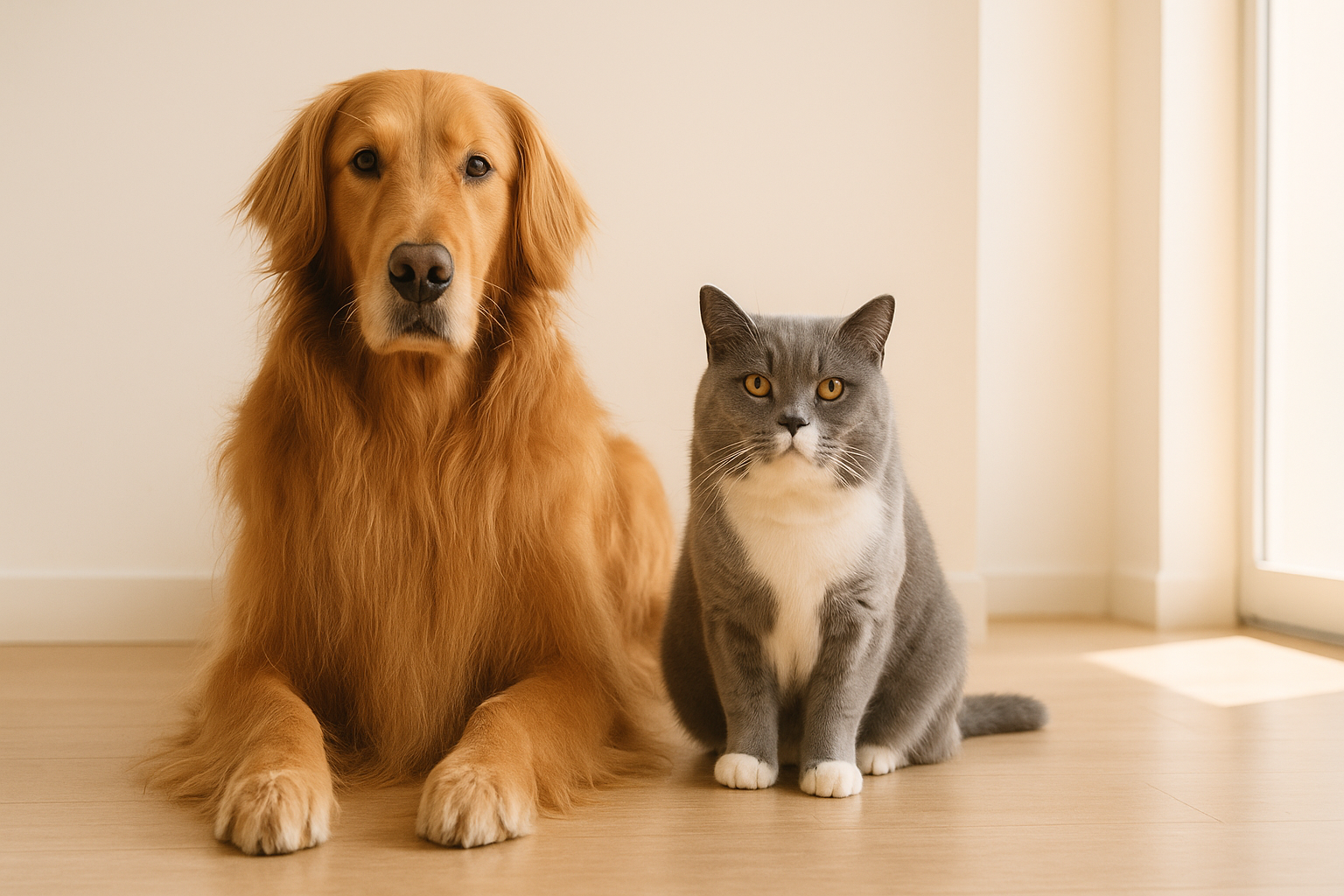
The most common question we get in the salon — usually right after a grooming session — is how long before the owner needs to come back. The honest answer is that it depends almost entirely on coat type, not on the breed name or how often someone else's similar-looking dog gets groomed.
Here is the practical breakdown we use ourselves.
For dogs
Short, smooth coats — 3 to 6 months
Breeds like Labradors, Boxers, Weimaraners, Dachshunds, and most terrier crosses in this category shed continuously but do not matt. They rarely need more than a bath, brush-out, and nail clip. Every three to six months is reasonable for a professional session, with weekly home brushing to manage shed hair.
Medium-length coats — 6 to 10 weeks
Cocker Spaniels, Border Collies, Shih Tzus, and similar breeds need regular trimming to keep the coat at a manageable length. Without it the coat around the ears, paws, and tail gets heavy and starts to matt. Six to ten weeks is the standard range — the more active the dog and the denser the coat, the closer to six weeks.
Curly and wavy coats — 4 to 8 weeks
Poodles, Doodle crosses, Portuguese Water Dogs, and similar breeds do not shed in the conventional sense. Dead hair stays in the coat and tangles with live hair. Without regular grooming, these coats can reach a state of severe matting within two to three months. Four to eight weeks is realistic — many Doodle owners find six weeks is the longest interval that keeps the coat manageable.
Home brushing matters more for this coat type than any other. Two to three sessions per week at home will significantly extend the life of a professional groom.
Double coats — 3 to 4 months, plus seasonal blowouts
Huskies, German Shepherds, Golden Retrievers, and most Nordic breeds have a dense undercoat that blows out twice a year. During these shedding seasons, a professional de-shed appointment dramatically reduces the volume of hair in your home. Outside of blowout seasons, three to four months between professional baths and brush-outs is usually sufficient.
For cats
Short-coated cats — once or twice a year
Most domestic short-hairs groom themselves adequately and rarely need professional grooming. A yearly check and bath is useful for older cats or those who have put on weight. If your short-haired cat produces a lot of hairballs, a de-shed treatment once or twice a year can help.
Semi-long-haired cats — every 2 to 3 months
Maine Coons, Ragdolls, Norwegian Forest Cats, and similar breeds have coats that can matt if not maintained. Two to three months between professional sessions, combined with weekly home brushing, works well for most of these cats. Without home maintenance the professional intervals need to be shorter.
Long-haired indoor cats — every 6 to 8 weeks
Persians, Himalayans, and long-haired rescue cats kept indoors are the highest-maintenance group. Their coats matt faster than almost any other type, and indoor conditions — lower activity levels, central heating — make this worse. Six to eight weeks is realistic. Many owners of Persians opt for a lion cut once or twice a year to give the coat a chance to reset.
What this actually means for booking
When you bring your pet in for the first time, we will tell you what we see in the coat and what schedule makes sense for that specific animal. Sometimes the breed-based guidance applies directly; sometimes the individual coat is denser or thinner than expected and the schedule needs adjusting.
If you are unsure, the frequency quiz on this site gives you a starting estimate based on five questions. It takes about two minutes and covers the main variables.